English
 русский
 عربى
عربى
Share

Our team is proud to offer on time guarantee and product guarantee to customer satisfaction.
Read More
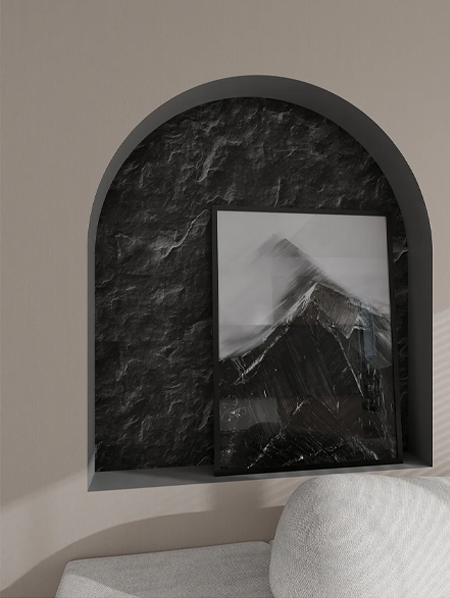
Flat synchronize door décor papers are decorative surface papers engineered to wrap flush-profile (flat) interior doors with a synchronized grain or texture pattern that aligns seamlessly across panels, frames, and surrounding furniture. The defining advantage of synchronized décor papers is that the visual grain, pore structure, or pattern on the door surface matches exactly with the emboss texture applied during lamination — producing a depth and realism that plain printed papers cannot achieve.
They are a primary surface material in modern interior door manufacturing, used by door producers, modular furniture makers, and fitted wardrobe manufacturers who need a consistent, high-quality decorative finish at scale. This guide covers how these papers are made, what specifications matter, how synchronization works technically, and how to evaluate and source them correctly.
Content
Both terms describe specific technical properties that distinguish these papers from standard decorative laminates or printed foils.
"Flat" refers to the door construction the paper is designed for — a smooth, planar door face with no routed profiles, raised panels, or moulded edges. Flat doors dominate contemporary and Scandinavian-influenced interior design, and account for a growing share of residential door production. The paper must perform uniformly across the entire door face without the stress relief that folded or wrapped profiles would provide, making dimensional stability and consistent adhesion across large, uninterrupted surfaces a core requirement.
Synchronization — also called "registered embossing" or "EIR" (Embossed In Register) — means the physical surface texture applied by the embossing press is precisely aligned with the printed grain or pattern underneath it. In a synchronized wood grain paper, for example, the embossed pore channels fall exactly on the printed dark grain lines, and the raised ridges of the emboss align with the lighter wood fiber areas in the print. The result is a tactile-visual coherence where what you see and what you feel are the same thing — an effect that strongly increases perceived material authenticity.
Non-synchronized papers use a generic emboss pattern (often a simple roller texture) applied independently of the printed design. While less expensive to produce, the visual result is noticeably flatter and less convincing, particularly under raking light conditions that are common in door and wall surface applications.
Flat synchronize door décor papers are composite structures. Understanding each layer clarifies why specifications like basis weight, resin loading, and overlay thickness matter to the finished door's performance.
The foundation is a highly refined, titanium dioxide-loaded alpha-cellulose paper. The TiO₂ content gives the paper its characteristic high opacity (typically above 92%), which is essential to prevent the substrate color — MDF, particleboard, or HDF core — from showing through and shifting the appearance of the printed décor. Basis weights for door application papers typically run from 60 g/m² to 130 g/m², with heavier weights used on doors where the substrate surface texture needs to be more thoroughly masked.
The décor design — wood grain, stone, solid color, textile, or abstract pattern — is printed using rotogravure or digital inkjet presses. Rotogravure remains the industry standard for large production runs because it delivers consistent color depth and repeat accuracy across rolls of 500 meters or more. Digital inkjet printing is increasingly used for shorter runs, prototypes, and custom décors, with modern systems capable of resolution up to 1,200 dpi that closely approaches rotogravure quality.
After printing, the paper is impregnated with thermosetting resins — almost universally melamine-formaldehyde (MF) for the surface and urea-formaldehyde (UF) for the core paper in some systems. Resin loading (the ratio of resin to dry paper weight) is a critical specification: typically 80–130% resin loading for décor papers destined for direct lamination onto door substrates. Under-loading reduces surface hardness and moisture resistance; over-loading can cause brittleness and cracking during press forming.
For higher-durability applications, a transparent overlay paper (basis weight typically 20–40 g/m²) is laid over the décor paper before pressing. The overlay, also melamine-impregnated and sometimes loaded with aluminum oxide for abrasion resistance, significantly increases surface hardness and scratch resistance. Overlays are standard in flooring applications (where abrasion resistance requirements are very high) but are also used on doors in commercial and high-traffic residential settings.
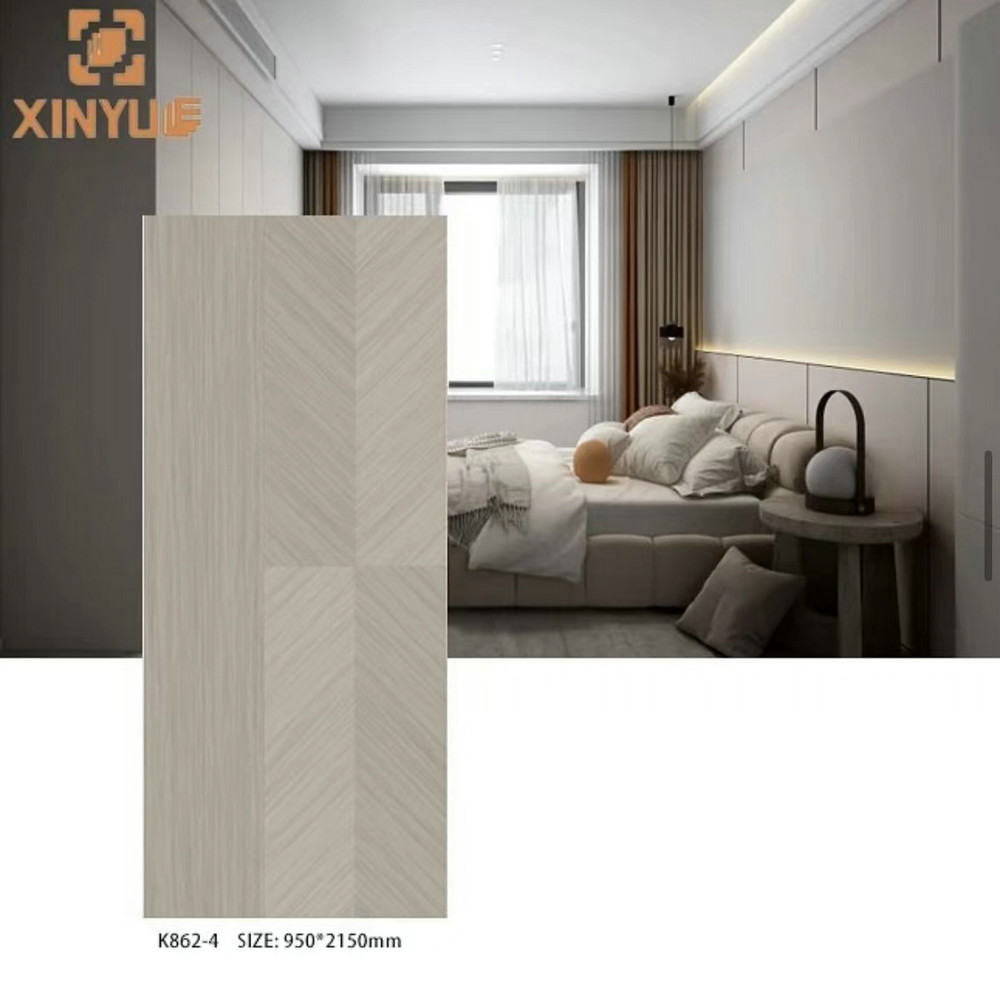
Achieving true print-to-emboss synchronization across a continuous roll of décor paper is a precision engineering challenge. The process involves three tightly controlled production stages.
The precision required makes synchronized décor paper production significantly more capital-intensive than non-synchronized alternatives, which is reflected in the price premium — synchronized papers typically cost 15–35% more than comparable non-synchronized décor papers — but the visual quality difference justifies this for door manufacturers competing in the mid-to-premium market segment.
When sourcing flat synchronize door décor papers, the following specifications have the most direct impact on finished door quality, production line compatibility, and long-term surface performance:
| Specification | Typical Range | Why It Matters |
|---|---|---|
| Basis Weight | 60–130 g/m² | Heavier paper masks substrate texture better; affects resin uptake uniformity |
| Resin Loading (volatile-free) | 80–130% | Determines surface hardness, moisture resistance, and press bonding strength |
| Residual Moisture Content | 4.5–6.5% | Critical for curing behavior in the press; too dry causes blistering, too wet causes delamination |
| Volatile Content | 6–8% | Affects flow behavior during pressing and final surface gloss level |
| Opacity | >92% | Prevents substrate color bleed-through; essential for consistent décor color across batches |
| Gloss Level (post-press) | 2–90 GU (varied) | Matte finishes (2–10 GU) dominate door applications; high gloss requires specific press platens |
| Emboss Depth | 50–250 µm | Deeper emboss increases tactile realism; must be matched to press pressure capability |
| Formaldehyde Emission Class | E1 / E0 / CARB P2 | Regulatory compliance for indoor air quality; E1 is European minimum, E0 and CARB P2 for premium markets |
| Roll Width | 1,250–2,100 mm | Must match press and substrate panel dimensions to minimize waste |
| Lightfastness | ≥6 (ISO 105-B02) | Resistance to UV-induced color fading; lower ratings cause visible yellowing near windows within 2–3 years |
The décor range available in synchronized flat door papers reflects both enduring design preferences and shifting interior trends. Understanding which décor categories dominate helps door manufacturers align their product range with market demand without overstocking slow-moving SKUs.
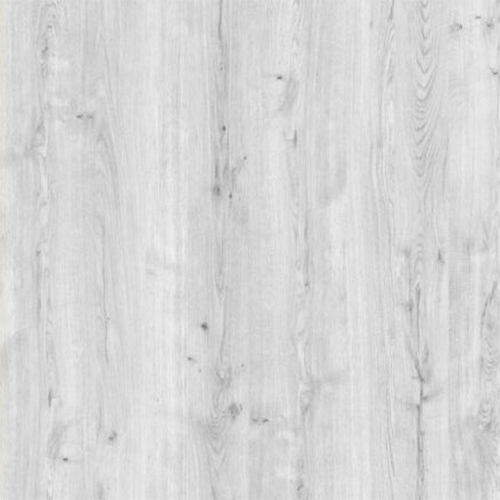
Wood grains consistently account for the largest share of door décor paper consumption globally — industry estimates place them at 60–70% of total door décor paper volume. Oak is dominant across European and North American markets, with particular demand for light, natural, and brushed oak variants. Walnut, ash, and eucalyptus are strong secondary categories. Synchronized wood grain papers produce visually convincing results because the registered pore channels create the tactile depth that makes wood grain feel authentic rather than printed.
Solid-color papers — particularly white, light grey, anthracite, and black — are the second largest category, driven by the continued growth of minimalist and handleless kitchen and wardrobe systems where doors are part of a unified color scheme. Synchronization on solid-color papers creates subtle linen, concrete, or brushed-metal textures rather than grain alignment, and is valued for the depth it adds to what would otherwise be a flat, plasticky surface.
Stone-effect and concrete-effect papers are the fastest-growing décor category in door and panel applications, driven by the popularity of industrial and loft aesthetics in residential design. Sincronized concrete décors are particularly effective because the embossed micro-texture reinforces the visual impression of cast surface roughness, making the paper-surfaced panel indistinguishable from real concrete at a fraction of the weight and cost.
Linen, fabric weave, and geometric pattern décors occupy a smaller but design-conscious niche, primarily in hospitality interiors, retail fit-outs, and premium residential projects. These papers benefit strongly from synchronization because the woven or geometric texture aligns perfectly with the print, creating surfaces that photograph and present as genuinely material-rich.
Flat synchronize décor papers are applied to door substrates using one of two primary press technologies, each with different implications for production volume, equipment investment, and achievable surface quality.
In short-cycle lamination, pre-impregnated décor paper is pressed onto the substrate (typically MDF or particleboard) using a heated platen press. Pressing temperatures of 170–210°C and pressures of 20–35 kg/cm² are applied for cycle times of 25–60 seconds, curing the melamine resin and bonding the paper permanently to the panel. The press platen transfers its own emboss texture to the paper surface during curing, and in synchronized systems, the platen texture is registered to the paper print before pressing begins.
SCL is the dominant production method for flat door panels in mid-to-large volume production, with modern presses capable of cycling 8–12 panels per minute in automated multi-daylight configurations.
In continuous pressing, the paper and substrate pass between heated steel belts in a continuous process. Double belt presses are used primarily in large-volume panel production where consistent output at high speed is prioritized. The synchronization challenge in continuous pressing is more complex than in SCL because the paper must remain in registration with the moving belt texture across the full press length — typically 6–20 meters. Advanced systems use servo-controlled paper feed to maintain registration in real time.
While flat doors are primarily produced by SCL or DBP, some door manufacturers use flexible PVC or polyurethane foils rather than paper for wrapped or profiled elements on the same door. It is important to specify paper-based synchronized décors for the flat face panels specifically, as foil and paper surfaces have different gloss levels, tactile properties, and aging characteristics that will be visually inconsistent if mixed on the same door assembly.
Flat synchronize door décor papers are tested against established standards for surface performance, indoor air quality, and sustainability. Specifying papers with verified certification protects manufacturers from quality disputes and meets increasingly stringent end-user and regulatory requirements.
Flat door manufacturers have several surface material options. Understanding where synchronized décor paper sits relative to alternatives clarifies the value proposition and helps position products correctly in the market.
| Surface Material | Visual Realism | Surface Durability | Relative Cost | Repairability | Sustainability |
|---|---|---|---|---|---|
| Synchronized Décor Paper (EIR) | High | High | Medium | Low | Good (FSC available) |
| Non-Synchronized Décor Paper | Medium | High | Medium-Low | Low | Good (FSC available) |
| PVC / CPL Foil | Medium | Medium | Low | Low | Poor (non-recyclable) |
| High-Pressure Laminate (HPL) | High | Very High | High | Low | Moderate |
| Real Wood Veneer | Very High | Medium | Very High | Medium (sandable) | Variable |
| Lacquered / Painted MDF | Medium | Medium | High | High (repaintable) | Moderate |
Synchronized décor paper occupies the strongest position for mid-to-premium flat door production — delivering high visual realism and durability at a cost point well below HPL or real veneer, with better environmental credentials than PVC foil alternatives.
For door manufacturers and panel producers procuring flat synchronize décor papers at volume, the difference between a reliable supplier and an inconsistent one shows up directly in production quality and customer returns. These are the key factors to evaluate beyond price.
Color drift between production lots is the most common quality complaint in décor paper procurement. Reputable suppliers maintain color tolerances within ΔE ≤ 1.0 between production batches, measured against a master reference standard. Always request and retain physical color standard samples for incoming quality inspection — spectrophotometric measurement alone misses texture and gloss variations visible to the eye.
Synchronization quality should be verified at multiple points across each supplied roll, not just at the start. Request supplier data on registration tolerance measurement across full production rolls. Acceptable registration drift for door-grade synchronized papers is typically ±0.3 mm maximum over the full roll length; anything beyond this produces visible desynchronization on panels cut from the latter portion of the roll.
Impregnated décor papers are hygroscopic — they absorb moisture from the air and their resin content changes as a result, affecting press behavior. Rolls must be stored at 18–22°C and 50–60% relative humidity, wrapped in moisture-barrier packaging until immediately before use. Papers stored outside these conditions for extended periods will press inconsistently and may produce surface defects including blistering or uneven gloss. Confirm the supplier's packaging standard and check roll condition on receipt before accepting delivery.
Every synchronized décor paper has an optimal press parameter window — temperature, pressure, cycle time, and moisture content — that must be dialed in precisely to achieve the specified surface result. A reliable supplier provides detailed pressing guidelines for each product and offers technical support for parameter optimization when a new décor is introduced to a production line. Suppliers who cannot provide this documentation are unlikely to maintain the consistency required for large-volume door production.
 Get Support
We focus on environmentally friendly, healthy, and fashionable home decoration, making your living space shine with unique charm.
Copyright © Hangzhou Xinyue Decorative Materials Co., Ltd. All rights reserved.
Custom Decorative Papers Manufacturers